• Method

Our Method: Story, Space, Sound, System

Great immersive formats don’t emerge from technology alone. They arise where narrative quality, spatial awareness, aesthetic precision, and technical intelligence intersect.

Art Precision Research Narrative Experiment Space Movement

Every project emerges within the tension between these elements.

Every project requires its own form.

STORY

We begin with questions:

What is the core that connects our narratives?
What form supports it?
How should it unfold? Who speaks? From which perspective? At what rhythm?
How much openness does the format require? What kind of dramaturgy only emerges through movement, listening, and presence in a place?

Our projects open up fields of attention where people can engage with content at their own pace and in their own way.

We don’t think of content as purely linear. Many of our works develop their narrative strength through movement, re-encounter, shifts in perspective, and situational perception. In spatial formats especially, a story cannot simply be “played back.” It has to connect with the place, the body, and the attention of the audience.

That’s why we develop dramaturgies that provide orientation without determining everything in advance. We work with voices, situations, density, transitions, and intentional gaps.

This results in narrative forms that are not only understandable, but memorable.

A good story doesn’t just explain.
It opens up a space of experience.

SPACE

Spaces are more than a backdrop. They are active participants in every experience.

They shape perception, expectation, proximity, distance, and memory.

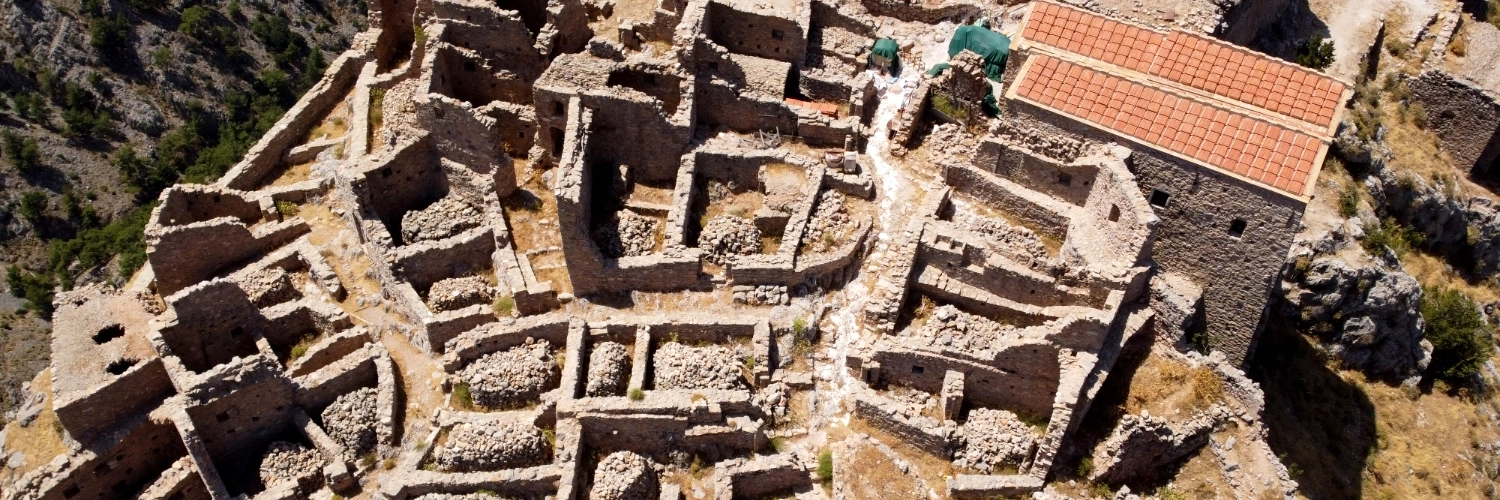
That’s why we work with a strong sensitivity to place. Every space carries its own materiality, history, acoustics, and implicit dramaturgies—such as movement patterns. Our task is to make these potentials readable and experiential.

Anyone developing spatial formats works with these conditions—consciously or unconsciously. We choose to do so consciously.

We analyze spaces closely:

How is a place entered?
Where does attention emerge?
What remains in the background?
What paths, thresholds, or points of intensity exist?
What stories are already present before a single sound is heard?

Our work uses these qualities not to overlay content onto a place, but to develop it from within.

This creates experiences where narrative and environment reinforce each other.

A space is always telling a story.
Good design listens.

SOUND

Sound forms the foundation of our architecture of attention.

With spatial audio, we shape direction, relationships, atmosphere, the invisible, proximity, and transitions.

Especially in site-specific and immersive formats, audio enables a unique kind of presence. It can guide and accompany people, but also disrupt and refocus them. It can activate memory and provide orientation. And the space itself can transform into a narrative structure through sound.

We work with voices, textures, layering, composition, spatial audio, and precise acoustic dramaturgy. What matters to us is not only what is heard, but how what is heard transforms the perception of a place.

Sound creates attention without needing to make everything visible.

SYSTEM

We work with highly innovative technological frameworks, including LiDAR, GPS, optical tracking, AR, and mobile interfaces.

What matters to us is not complexity for its own sake, but the precision with which a system is translated into experience.

Technology expands what is possible spatially, narratively, and acoustically. It is not an end in itself—and ideally, it disappears for the user.

A good technological solution is not impressive because it demands attention, but because it works seamlessly. It creates depth without overloading the experience.

That’s why, with every technical decision, we don’t first ask: What is possible?
We ask: What makes sense? What strengthens the form? What remains clear in use?

Technology is at its best when it carries complexity while enabling ease.

Our process

Every project has its own dynamics. Still, our work follows a process in which artistic openness and technical possibilities are systematically brought together.
h70_appr-01
1. Understanding

We begin with context: location, content, audience, goals, institutional framework, and design possibilities.

How much freedom do we have in developing the sonic narrative? What resources are available?

h70_appr-02
2. Distilling

From analysis, we develop a strong core idea.

Narrative, spatial, aesthetic, and technical lines come together.

From possibilities, a form emerges.

h70_appr-03
3. Prototyping

We test early.

Dramaturgies, interaction models, spatial logic, and acoustic setups are explored before being finalized.

This prevents decorative solutions and strengthens internal coherence.

200x200_obj-menu-04
4. Implementation

Reliability.

In execution, we combine high design standards with technical precision.

We focus on clarity, robustness, atmosphere, and quality of use.

200x200_obj-menu-01
5. Refinement

In the final stage, rhythm, transitions, orientation, and impact come into focus.

Because often, the quality of a project is not decided by its core idea, but by how precisely it is realized.

Understanding

Distilling

Prototyping

Implementation

Refinement

AR Audio Stories since 2018.

We are a team of media artists and sound designers, working within an international network of artists across disciplines.

Peter Kollreider

Founder, Storytelling
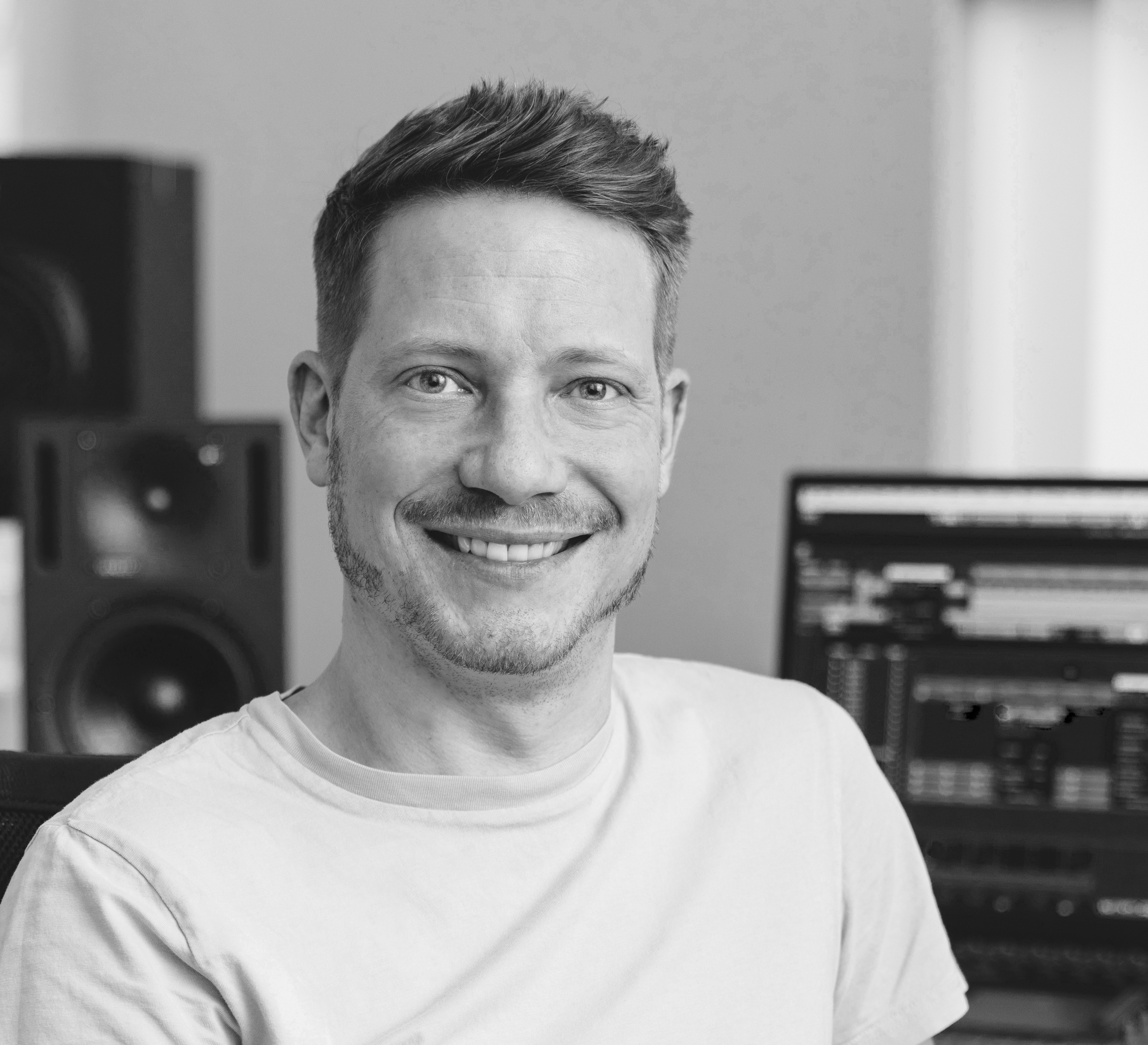
Thomas Aichinger

Founder, Audio Design